Category: Ulcerative Colitis

Raktapittakulkuthar Ras – Ayurvedic Remedy for Bleeding Disorders
bleeding disorders

ABSTRACT

Processed spicy-salty foods, pollution-induced heat, winter dryness, chronic stress, and vitamin K-deficient diets fuel the surge in Raktapitta cases nowadays, triggering sudden, profuse bleeding from body openings such as the nose (epistaxis), mouth (hematemesis), urine (hematuria), and rectum without any injury. People consume too many pungent, sour, and hot items, push their bodies with overwork and heat exposure, and endure constant emotional pressure, all of which stir up Pitta dosha fiercely. This aggravated Pitta then poisons the Rakta dhatu (blood tissue) right at its source in the spleen and liver (Pliha-Yakrit), sparking a rapid, burning hemorrhage that ancient sages labeled a Mahagada—a major killer. Ayurveda offers many medications along with lifestyle modifications for these disorders. Raktpittakulkuthar ras is one of the best Ayurvedic herbomineral formulations for bleeding disorders. Let’s know about this formulation in detail.
bleeding disorders

INTRODUCTION

Raktapittakulkuthar Ras stands as a potent herbo-mineral formulation renowned for halting Raktapitta bleeding and its complications like epistaxis along with hemorrhagic crises. The name “Kulkuthar” (root-destroyer) reflects its fierce assault on Pitta-Rakta roots, combining the ingredients in Vasa (Adhatoda vasica), triturated for profound Pitta pacification and Rakta stabilization. Moreover, there are two phrases given in the text for this formulation which signifies its importance in Raktapitta (bleeding disorders).

रक्तपित्तकुलकण्डनाभिधो जायते रसवरोअस्त्रपित्तिनाम् ।
(योगरत्नाकरः/ रक्तपित्तरोगाधिकारः/ १०/१२२)

This preparation is known as Rakatpittakulkandan ras, which is the supreme medicine for rakatpitta

नास्त्यनेन सममत्र भूतले भेषजं किंमपि रक्तपित्तनाम्।।१२३।।
(योगरत्नाकरः/ रक्तपित्तरोगाधिकारः/ १०/ १२३ )

This shloka glorifies Raktapittakulkuthar Ras as earth’s unparalleled supreme remedy for conquering Raktapitta.

CLASSICAL INDICATION

Rakatpitta (bleeding disorders)

INGREDIENTS

शुद्धपारदबलिप्रवालकं हेममाक्षिकभुजङ्गरङ्गकम्।
मारितं सकलमेतदुत्तमम् भावयेदथ पृथक्पृथक्द्रवैस्त्रिशः ।।१२०।।
चन्दनस्य कमलस्य मालतीकोरकस्य वृषपल्लवस्य च।
धान्यवारणकणाशतावरीशाल्मलीवटजटामृतस्य च।।१२१।।
  1. Purified Mercury (Shuddha Parad)
  2. Purified Sulphur (Shuddha Gandhak)
  3. Coral Calx (Praval Bhasma)
  4. Chalcopyrite calx (Swarna Makshik Bhasma)
  5. Naga Bhasma (Lead Calx)
  6. Vanga Bhasma (Tin Calx)

Bhavna (levigating medium)- These ingredients are triturated (Bhavana) with the juices or decoctions of

  1. Sandalwood (Chandana)
  2. Lotus (Kamala)
  3. Flower buds of Malati (Jasmine)
  4. Tender leaves of Vrisha (Adhatoda vasica)
  5. Dhanyaka (Coriander)
  6. Varana (Crataeva nurvala)
  7. Kusha Grass (Desmostachya bipinnata)
  8. Shatavari (Asparagus racemosus)
  9. Shalmali (Silk cotton tree)
  10. Vata Jata (aerial roots of Banyan tree)
  11. Guduchi (Tinospora cordifolia).

INGREDIENT DESCRIPTION

  1. Purified Mercury (Shuddha Parad) – Mercury, after proper purification, helps control excessive bleeding and has a deep tissue penetration effect, supporting hemostasis in mucosal and internal bleeding. Its special effect helps stabilize vascular integrity.
  2. Purified Sulphur (Shuddha Gandhak) possesses Shodhana (detoxifying) and Raktashodhaka (blood purifying) properties. Sulphur’s mild astringent and antimicrobial actions help control bleeding and prevent infection in sites of blood loss.
  3. Coral Calx (Praval Bhasma) is  rich in calcium carbonate, which helps in strengthening vascular walls, helping to reduce capillary fragility and control bleeding tendencies. Its cooling potency also pacifies Pitta, the chief dosha responsible for bleeding.
  4. Chalcopyrite Calx (Swarna Makshik Bhasma) contains copper and iron compounds, which promote blood nourishment and aid in vascular stabilization, indirectly helping to manage bleeding.
  5. Naga Bhasma (Lead Calx) particularly pacifies Pitta, helping to control mucosal and gastrointestinal bleeding. Its trace mineral content also supports vascular integrity.
  6. Vanga Bhasma (Tin Calx) exhibits mild hemostatic action, enhancing tissue resilience and reducing excessive hemorrhage. Its special effect also supports blood quality.
  7. Chandana (Sandalwood) is cool in potency and it rapidly cools aggravated Pitta and stabilizes overheated Rakta Dhatu (blood tissue). Also, Santalol (active constituent) exhibits haemostatic, helping arrest bleeding.
  8. Kamala (Lotus) has flavonoids & tannins that strengthen capillary walls and prevent spontaneous bleeding.
  9. Malati (Jasmine Bud) has Essential oils (benzyl acetate) which is a mild vasoconstrictive and anti-inflammatory action supporting haemostasis.
  10. Vrisha (Adhatoda vasica) also known as Vasa is mentioned as the agray dravya (supreme herb) for Raktpitta (bleeding disorders). Its bitter and astringent taste reduces internal bleeding. Moreover the Vasicine alkaloid present in this is known for haemostatic and capillary-protective effects.
  11. Dhanyaka (Coriandrum sativum) with its cool potency and Linalool which reduces vascular irritation and supports blood stability.
  12. Varana (Crataeva nurvala) checks bleeding by constricting blood channels. Its Triterpenoids aid in healing damaged Rakta-srotas (blood vessels).
  13. Kusha Grass (Desmostachya bipinnata) has Siliceous compounds that support vascular integrity and reduce seepage of blood. It is very useful in spontaneous bleeding due to the haemostatic effect.
  14. Shatavari (Asparagus racemosus) is very much beneficial in nourishing, promoting tissue repair and preventing recurrent bleeding, due to the presence of the Steroidal saponins (Shatavarins).
  15. Shalmali (Bombax ceiba) has wound-healing action.Its Tannins & mucilage seal bleeding surfaces and promote clot formation.
  16. Vata Jata (Banyan aerial roots) has a potent astringent taste that can reduce excessive blood discharge. Its Polyphenols aid in strengthening blood vessels and control capillary bleeding.
  17. Amrita (Tinospora cordifolia) has Tinosporin & diterpenoids that enhance haemostasis and immunity, preventing recurrence.

METHOD OF PREPARATION

  • Take a clean stone slab and grind purified mercury and sulphur together to form a fine homogenous paste (Kajjali)
  • Mix this Kajjali with the remaining ingredients in powdered form.
  • Grind thoroughly with the paste to obtain a homogeneous mixture.
  • Take 10 dravyas (substances) and triturate 30 times (3 times with each levigating medium).
  • Prepare 2–2 Ratti (250 mg) of tablets and dry them in shade.

MEDICINAL PROPERTIES

  • Raktapittakulkuthar Ras pairs best with honey (Madhu) and Vasa patra swarasa (Adhatoda vasica leaf juice) as anupana for optimal Pitta-Rakta shamaka effects, arresting hemorrhage, strengthening Raktavaha srotas (blood channels), and restoring hemostatic balance through stambhana (astringent) and rakta shodhana (blood purifying) actions.
  • For Urdhvajanya Raktapitta (Epistaxis/Nosebleeds), administer Raktapittakulkuthar Ras (62.5-125 mg twice daily) with Pravala pishti (500 mg), curbing nasal bleeding and Pitta aggravation via enhanced coagulation promotion and cooling nasal mucosa synergy.
  • In cases of Adhoga Raktapitta (Hematuria/GI Bleeds), Raktapittakulkuthar Ras combines with Kamadudha Ras (125 mg), a potent Pitta pacifier for Raktasraava (blood loss) and Daha (burning), boosting dhatu sanghata (tissue cohesion) and plihan-yakrit saharana (spleen-liver support).
  • In hemorrhagic complications with Mandagni (Weak Digestion) & Dourbalya (Debility), Raktapittakulkuthar Ras works best with Aarogya vardhini Vati (250 mg), aiding agni deepana (digestive fire ignition) and bala vardhana (strength promotion) by balancing tridosha and countering raktapitta prakopa (disease flare-ups).

IMPACT ON DOSHA

Raktapittakulkuthar Ras primarily pacifies Pitta at Pliha-Yakrit (spleen-liver), neutralizing hot-sharp qualities driving Rakta vitiation. Balances Vata against foamy bleeds and Kapha against slimy outflows.

INDICATIONS

Raktapittakulkuthar Ras treats hemorrhagic disorders effectively.

  1. Urdhvaj Raktapitta: Epistaxis, hematemesis, hemoptysis from upper channels.
  2. Adhoga Raktapitta: Hematuria, rectal bleeding, menorrhagia from lower tracts.
  3. Associated Conditions: Burning sensation (daha), weakness (dourbalya), spleen-liver dysfunction.

Dosage

1-2 tablets (250 mg to 500 mg) once or twice daily.

Anupana (Adjuvant)

प्राणदो मधुवृषद्रवैरयम् सेवितस्तु वसुकृष्णाम्लेर्मितः।।१२२।।
(योगरत्नाकरः/ रक्तपित्तरोगाधिकारः/ १०/ १२२)

CONTRAINDICATION

  1. Avoid with Anticoagulant such as warfarin/aspirin
  2. Pregnancy and lactation

CONCLUSION

Raktapittakulkuthar Ras stands as a time-tested herbo-mineral powerhouse against Raktapitta’s hemorrhagic crisis, masterfully pacifying vitiated Pitta-Rakta through purified rasa dravyas and Vasa (Adhatoda vasica) synergy. As modern diets and stress fuel Mahagada’s rise, this supreme remedy—lauded in shlokas as earth’s unmatched healer—delivers rapid hemostasis and vitality when guided by expert vaidyas with proper anupana (adjuvant). Pair with Pitta-pacifying lifestyle shifts for lasting blood harmony.
Ulcerative Colitis: Ayurvedic Healing for Pittaja Grahani Roga

Abstract

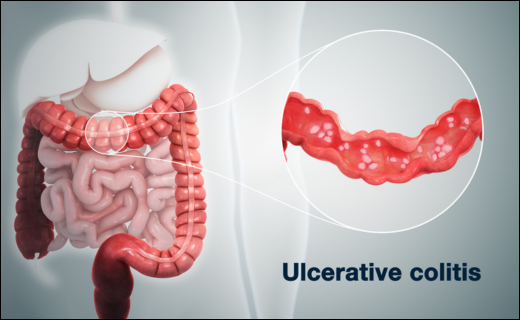
Ulcerative Colitis (UC) is more than a disease of the gut—it is a disorder of inner imbalance of the immune system and body. In modern science,  It is an autoimmune inflammatory bowel disease which affects the part of GI tract and has lots of symptoms while Ayurveda interprets it as the manifestation of Pitta-Vata Dushti leading to Raktatisara or Pittaja Grahani. Let’s learn about it in brief.

Introduction

IBD is defined as a group of chronic disorders that cause inflammation in the digestive tract and is of two types:

1. Crohn’s Disease: Crohn’s disease is a chronic inflammatory bowel disease (IBD) characterized by transmural granulomatous inflammation that can involve any part of the gastrointestinal tract from mouth to anus, most commonly the terminal ileum, with skip lesions, strictures, fistulas, and perianal disease.

2. Ulcerative colitis: Is a chronic inflammatory bowel disease (IBD) primarily affecting the colon and rectum, characterized by ulceration and continuous mucosal inflammation.

Causes

There is not any specific cause of ulcerative colitis. But Some how there are some suitable causes of UC are following :

  • Immune system dysfunction
  • Genetics factors
  • Environmental factors
  • Gut bacteria Imbalance
  • Stress and diet

Sign & Symptoms

The symptoms of Ulcerative Colitis (UC) vary depending on the severity and extent of colon inflammation. The common symptoms include:

  • Diarrhea with blood or mucus.
  • Urgency of Bowel Movements (Tenesmus)
  • Fatigue and Weakness
  • Weight Loss
  • Loss of Appetite and Nausea
  • Fever and Malaise
  • Dehydration
  • Abdominal and Rectal pain

Diagnosis

  • Complete Blood Count
  • Stool Examination
  • Fecal Calprotectin Test
  • Colonoscopy
  • Flexible Sigmoidoscopy

Modern Treatment

  • Aminosalicylates: Mesalamine , Sulfasalazine, Balsalazide etc
  • Corticosteroids: Budesonide, Hydrocortisone, Methylprednisolone, Prednisone etc
  • Immunomodulators: Azathioprine, 6-MP, Cyclosporine etc
  • Multivitamin and iron supplements can also be given.

Ayurvedic Overview

In Ayurvedic point of view UC is denoted with Raktatisara or Pittaja Grahani. By Intake of katu ras (Pungent taste), Having Long term Indigestion Issue, By Excessive use of Amla ras (Sour taste) and kshar (Alkali), By intake of excessive hot food the Pitta will raise and destroy the digestive fire (agni) by covering it.Vata will also get aggravated along with this and shows Symptoms such as Blood or mucus in stool , Undigested Bluish or yellowish loose stools, foul-smelling sour belching, heartburn, anorexia (Aruchi), Polydipsia.

In ayurveda the treatment is based on the Shodhan (Purification therapy) and Shaman Chikitsa (Pacification therapy). Pitta-vata shaman (balances pitta and vata) ,Varan Ropana (wound healing), Agni deepan (Appetizer), Srotoshodhana (purification of body channels ), Rasayan therapy (rejuvenating therapy). The Shaman Chikitsa (Pacification therapy) includes herbal formulations that decrease the vitiated symptoms.

Some Ayurvedic drugs and their uses are

Kutaj

(Holarrhena antidysenterica): This classical drug is used for Atisara (Diarrhea). It has sheeta (cooling) properties that help in soothing inflammation, burning sensation. It is strong grahi (absorbent) helps in absorbing excessive fluid and stambhan (astringent) makes stool firmer which helps in decreasing frequency of stool.

Bilav

(Aegle marmelos): It helps in repairing intestinal lining and heals ulcers, reduces swelling , reduces bleeding, burning sensation and soothes mucus membrane in colon and rectum. It also pacifies pitta dosha.

Yashtimadhu

(Glycyrrhiza glabra): It helps in Pittashaman (To Balance Pitta dosha), Varanropan (to heal the Ulcers), Rakatprasadan (Purify and Soothes Vitiated blood), Grahani Balya (Strengthen the colon ) Stambhana (Indirect Hemostasis).

Nagarmotha

(Cyperus rotundus): It helps in Balancing the kapha and pitta doshas, Healing ulcers, in reducing inflammation and bleeding and has astringent properties which helps in stool consolidation. It also helps in reducing dehydration in the body.

Durva 

(Cynodon dactylon): This helps best in Raktstambhan (hemostatic) and also in digestion and cooling effect in the body.

Arjuna

(Terminalia Arjuna): It helps as anti-Hemorrhagic (to stop bleeding) and in healing of intestinal lining.

The Shodhan Chikitsa ( Purification therapy) is also very effective and useful

  • Mridu Virechana (Mild purgation)
    Eliminates accumulated Pitta and Ama from the intestines, Reducing Inflammation.
  • Takra Basti (Medicated Buttermilk Enema)
    Highly effective in Pittaj and Raktaj disorders. The Cooling, Astringent, and Healing properties of Buttermilk help restore normal mucosa and prevent relapse.
  • Pichha Basti (Mucilaginous Enema)
    Provides lubrication, heals ulcers, and reduces bleeding.

 Rasayana Chikitsa (Rejuvenation Therapy)

  • Yashtimadhu Rasayan
  • Guduchi Rasayan
  • Kamdhuda and Panchamrit Parpati Rasayan.
  • Amalki Rasayan
  • Yoga and meditation:  Yoga balance Agni (Fire) and calms Pitta use asan (Pose) like :Vajrasana (Diamond or Thunderbolt pose), Pawanmuktasana (Wind releasing pose), Balasana (Childpose), Mandukasana (Frog pose).
  • Pranayama:  Sheetkari (Hissing breath), Bhramari (Humming bee breath), and Anulom Vilom (Alternate nostril breathing).
  • Meditation:  Daily 15 minutes of mindfulness.

Diet & Lifestyle Guidance

1. Recommended Diet (Pathya)
Boiled rice, Moong dal soup, Bottle gourd, and Pumpkin,Pomegranate, coconut water and ghee for gut healing.Warm water with a pinch of cumin powder.

2. To Avoid (Apathya)
Spicy, fried, and sour foods.Tea, coffee, alcohol and smoking.Anger, stress, and late-night work.

Herbal Remedies for Ulcerative Colitis by Planet Ayurveda

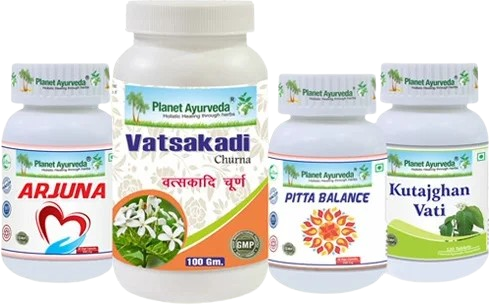
Planet Ayurveda, under the expert guidance of Dr. Vikram Chauhan (MD – Ayurveda), offers 100% pure, authentic, and GMP-certified herbal remedies. The Ulcerative Colitis Care Pack is a specially designed combination that heals the colon, balances doshas, and strengthens the digestive system. Ulcerative Colitis Care Pack Includes:

Ulcerative Colitis Care Pack

1. Kutajghan Vati

It is a classical tablet formulation that is made up of Kutaja (Holarrhena antidysenterica) that naturally pacifies pitta and kapha dosha , Improves agni (digestive fire) and reduces ama (toxins), enhance absorption power in colon and act as a anti diarrheal.

Dose : 2 tablets twice daily with plain water after a meal.

2. Pitta Balance

It is the capsule formulation made up with natural calcium compounds like Praval Pishti (Coral Calcium), Kamdudha Ras, and Mukta Pishti, that helps in pacifying pitta dosha by reducing internal heat, burning sensation, acidity, bleeding tendencies.

Dose : 1 capsule twice daily with plain water after a meal.

3. Vatsakadi Churna

It is the churna formulation which is a blend of herbs like Bilva (Aegle marmelos), Dhania (Coriandrum sativum),Saunf (Foeniculum Vulgare) and Kutaj (Holarrhena antidysenterica). It helps in regulating bowel movements , Reducing inflammation, Balancing pitta and kapha dosha, helps in Mucosal healing and controls diarrhoea.

Dose: 1 teaspoonful twice daily with plain water after meal

4. Arjuna Capsules

This is the capsule formulation made up of Arjuna (Terminalia arjuna) extract, these capsules help in wound healing (Varan Ropana), Reducing inflammation, pacifying pitta, controlling bleeding and helps in mucosal healing. It also has antioxidant properties, gut microbiota balance and acts as an immunomodulator.

Dose : 2 capsules twice daily with plain water after a meal.

Conclusion

Ulcerative Colitis is more than a disorder of the colon — it mirrors the inner heat, imbalance, and restlessness within. Ayurveda teaches that true healing begins when harmony is restored among body, mind, and soul. Ayurveda serves as a conduit between timeless Ayurvedic wisdom and contemporary healthcare, offering nature’ “When Pitta finds calm, the colon regains balance; when the mind attains peace, digestion flourishes.”